Ganga Aarti at Wedding & Cultural Celebrations: Complete Guide
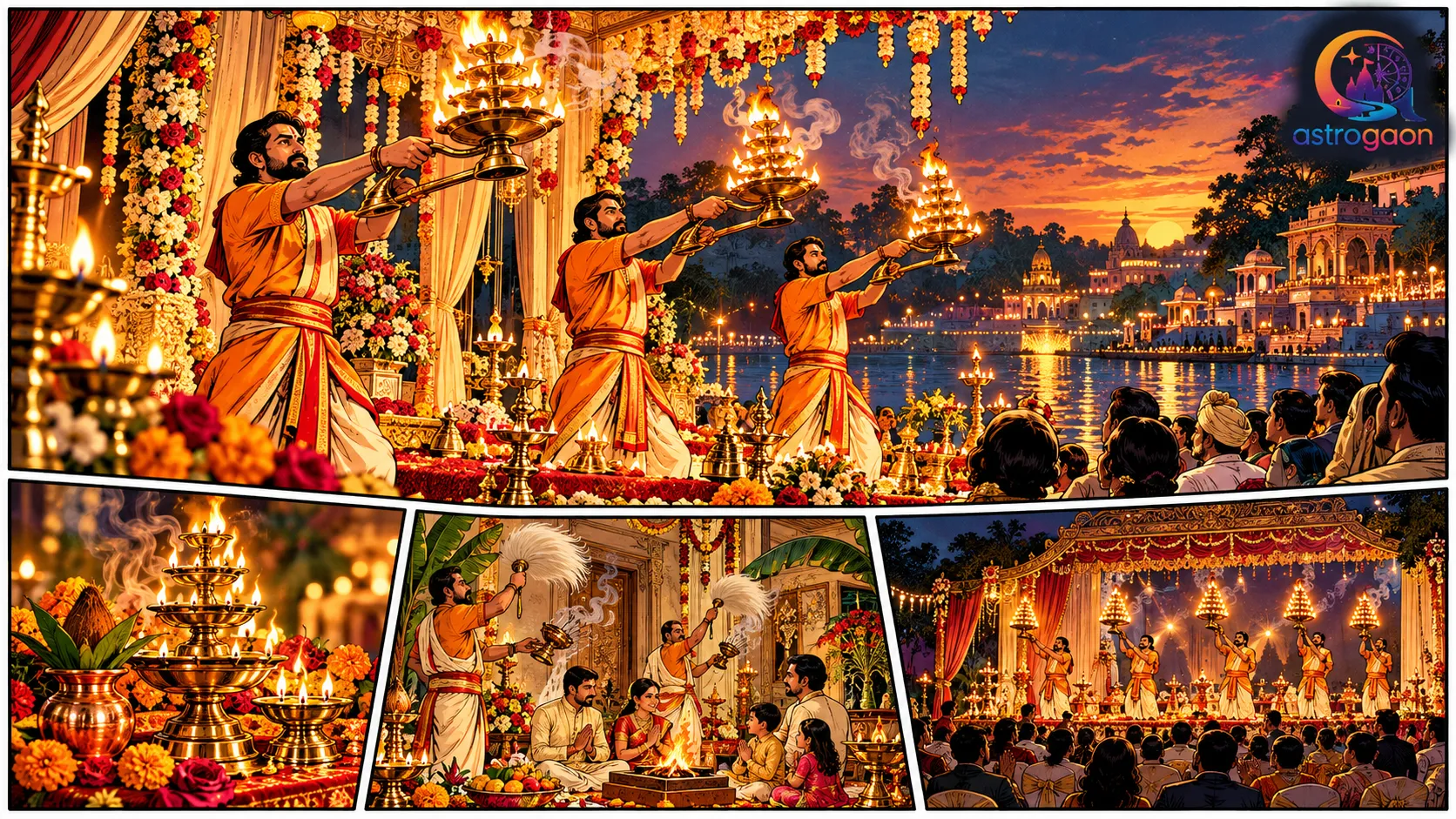
Discover how bringing the divine ritual of Ganga Aarti to your wedding, family milestone, or cultural gathering invokes auspiciousness, purity, and spiritual grace.
- Published Oct 12, 2026
- By AstroGaon Admin
- 9 min read
Incorporating a ganga aarti at wedding festivities brings the sacred, celestial vibration of India's holy rivers directly into your marital celebration. The shimmering light of brass lamps, the reverberation of conch shells, and the resonant chanting of ancient Vedic mantras create an ethereal sanctuary for the union of two souls. Traditionally performed on the iconic riverbank ghats of Varanasi, Haridwar, and Rishikesh, this divine ceremony is now increasingly requested at wedding venues, private family estates, and public cultural assemblies across the nation. By scheduling a grand Ganga Arti at Wedding through AstroGaon, families can experience an authentic, priest-led ritual that elevates their auspicious day into a deeply spiritual milestone.
In this comprehensive guide, we explore the deep Vedic significance of performing Ganga Aarti during life milestones, detail the traditional step-by-step ritual vidhi (procedure), outline crucial planning logistics, and address common questions so your event shines with unblemished spiritual radiance.
The Spiritual Significance of Ganga Aarti in Vedic Tradition
In Vedic culture, Goddess Ganga (Ma Ganga) is revered not merely as a physical river, but as the living embodiment of divine purity, grace, and liberation. She represents the unceasing flow of cosmic energy that purifies negative karma and nurtures spiritual awakening. The word Aarti stems from the Sanskrit terms Aa (meaning 'towards') and Rati (meaning 'highest love' or 'devotion'). Performing an Aarti is an act of total surrender and deep love toward the Supreme Divine.
The ritual centers around the worship of the Pancha Tattva—the five essential elements of creation:
- Prithvi (Earth): Represented by fragrant flowers, sandal paste (chandan), and ceremonial offerings.
- Jal (Water): Represented by consecrated water from the holy river Ganges, stored in sacred copper vessels (kalash).
- Agni (Fire): Represented by camphor (karpura) and multi-tiered brass oil lamps (aarti dipa).
- Vayu (Air): Represented by burning natural incense (dhupa) and ceremonial yak-tail fans (chamara).
- Akasha (Ether/Space): Represented by the sacred sound vibration of conch shells (sankhanada), temple bells, and rhythmic drumbeats (damaru).
When these elements are consecrated simultaneously during the ceremony, the local environment undergoes a complete energetic cleansing. Negative forces dissipate, leaving behind an atmosphere imbued with peace, harmony, and Sattva (purity).
Why Incorporate Ganga Aarti at Wedding Events?
Marriage in Hindu tradition (Vivaha Samskara) is not merely a social contract, but a sacred spiritual union that unites two souls across lifetimes. Introducing a ceremonial ritual inspired by the riverbanks of Kashi or Haridwar serves as a powerful bridge between earthly joy and divine blessing.
1. Purification of the Marital Space
Before the couple takes their solemn vows around the sacred fire (Saptapadi), performing a synchronized 35-minute ceremony purifies the entire venue. The glowing flames absorb residual stress, while Vedic chanting calms the minds of the couple and their guests.
2. Seeking Cosmic Blessings from Ma Ganga and Lord Shiva
Ma Ganga resides in the matted locks of Lord Shiva, making her worship deeply connected to marital longevity, prosperity, and emotional harmony. By invoking her divine presence, the couple seeks protection, fertility, and eternal togetherness.
3. A Visually Mesmerizing Experience for Guests
The sight of trained Acharyas clad in traditional saffron and silk attire, moving multi-tiered brass lamps in fluid, perfect synchronization, creates an unforgettable visual masterpiece. Guests are moved from being mere observers to active participants in a collective spiritual awakening.
Families seeking to include this holy ritual can explore specialized options like Ganga Arti at Wedding to ensure certified priests conduct every chant with authentic precision.
Customizing Ganga Aarti for Family Celebrations and Sanskritik Ayojans
While wedding ceremonies are a popular choice for this grand ritual, its spiritual benefits extend seamlessly to various life milestones and community assemblies.
Family Celebrations and Milestones
Milestone birthdays (such as Shashti Poorthi or 60th birthday), silver and golden wedding anniversaries, baby naming ceremonies (Namakarana), and housewarming events (Griha Pravesh) are ideal occasions for a personalized 60-minute worship service. Booking a dedicated Ganga Arti on Family Celebrations allows families to establish a direct connection with the divine right within their home or private celebration hall. Whether arranged as an intimate home ritual or organized as an exclusive VIP experience on the sacred ghats of Uttarakhand or Uttar Pradesh, it brings peace and health to elder family members.
Sanskritik Ayojans (Cultural Events and Assemblies)
For community festivals, spiritual gatherings, temple anniversaries, and grand cultural conventions, organizing a Ganga Arti on Sanskritik Ayojans invokes collective positive vibrations. A 60-minute public ritual creates a unifying spiritual aura, drawing hundreds of attendees together in devotion. Similar rituals are frequently held during grand community festivals and corporate gatherings, which you can read about in our overview of Ganga Arti on festive occasions and Ganga Arti on Corporate Events.
To view all specialized ritual offerings led by verified scholars, you can browse through our comprehensive directory of All services or learn more about Our Acharyas who oversee these ancient rites.
Step-by-Step Vidhi: How the Ceremony Unfolds
When conducted by authentic Vedic scholars, the ceremony follows a strict ritual sequence (Vidhi) derived from ancient Agamic texts. Here is how a full-scale ceremony is structured:
+------------------------------------------------------------------+
|                  RITUAL FLOW OF GANGA AARTI                      |
+------------------------------------------------------------------+
| 1. Sankalpa (Solemn Intention & Dedication)                      |
| 2. Ganga Avahan & Mangalacharan (Invocatory Chants)              |
| 3. Dhupa Seva (Offering of Sacred Incense)                       |
| 4. Grand Dipa Seva (Offering of Multi-tiered Brass Lamps)        |
| 5. Karpura & Chamara Seva (Camphor & Ceremonial Fan Offerings)   |
| 6. Pushpanjali & Aarti Pradakshina (Floral Offerings & Circle)   |
| 7. Distribution of Holy Ganga Jal & Prasadam                     |
+------------------------------------------------------------------+
Step 1: Sankalpa (Sacred Declaration)
The head priest begins by helping the hosts or newlyweds perform Sankalpa—a formal vow stating their lineage (Gotra), names, time, venue, and specific intention (marital bliss, family prosperity, or community well-being).
Step 2: Invocatory Mantras and Ganga Avahan
The priests chant ancient Vedic verses, invoking the presence of Goddess Ganga, Lord Shiva, Lord Ganesha, and the guardian deities of the ten directions (Dikpalas). Sacred holy water (Ganga Jal) is sprinkled over the ritual space to establish purity.
Step 3: Dhupa Seva (Incense Offering)
Priests ignite aromatic resins, guggul, and multi-stemmed incense burners, moving them in graceful circular patterns. This clears the subtle atmosphere and fills the venue with divine fragrance.
Step 4: The Main Dipa Seva (Brass Lamp Ritual)
This is the dramatic highlight of the service. Priests lift heavy, multi-tiered brass lamps (aarti dipa) containing camphor and oil-soaked wicks. Moving with synchronized precision, they rotate the lamps in clockwise motions, representing the rotation of planets around the cosmic center.
Step 5: Chamara and Peacock Fan Offerings
Following the flame offering, the priests sway white yak-tail fans (chamara) and large peacock feather fans. This symbolizes cooling the divine energy and offering royal honor to the Supreme Light.
Step 6: Pushpanjali and Prasadam Distribution
The ceremony concludes with Pushpanjali (offering of fresh flower petals), universal peace prayers (Shanti Path), and the distribution of blessed Prasadam and holy water to all attendees.
Venue Setup and Practical Logistics
To ensure a seamless, safe, and visually striking event, hosts should pay close attention to several spatial and technical requirements:
- Elevated Stage Arrangement: The priests require an elevated, level platform (at least 2 to 3 feet high) so all guests have an unobstructed view of the lighting movements.
- Fire Safety & Ventilation: Because heavy brass lamps and camphor burn bright flames, ensure adequate ceiling height and proper ventilation, especially for indoor ballrooms or banquet facilities.
- Acoustics & Sound System: High-quality microphones and sound systems are essential to amplify the low-frequency Vedic chants, conch blowing, and rhythmic bells across the venue.
- Floral and Brass Stage Decor: Decorate the stage with traditional marigold garlands, banana leaves, brass vessels, and rangoli artwork to accentuate the sacred aesthetic.
- Timing the Ceremony: The most auspicious time for this ritual is during Sandhya Kaal—the twilight transition between day and night (dusk). However, for wedding receptions or daytime events, timing can be adjusted in consultation with your astrologer.
Common Misconceptions and Mistakes to Avoid
Despite its growing popularity, several misunderstandings surround performing this ceremony outside traditional river ghats:
- Myth: Ganga Aarti can only be performed beside a flowing river.
- Fact: While riverbanks hold innate spiritual power, Vedic scriptures state that when consecrated water (Ganga Jal) and authentic Vedic mantras are invoked with pure devotion (Bhakti), the divine presence manifests wherever the ritual takes place.
- Mistake: Treating the ritual as a mere theatrical performance.
- Correction: Although visually breathtaking, the ceremony is a sacred Vedic ritual. Hosts and guests should maintain decorum, refrain from wearing shoes near the altar, and participate with reverent devotion.
- Mistake: Hiring untrained performers instead of certified priests.
- Correction: The energetic potency of the ceremony relies on precise mantra pronunciation and strict ritual purity. Engaging experienced Acharyas ensures spiritual efficacy and authentic execution.
Key Takeaways
- Divine Elevation: Integrating a Ganga Aarti into weddings, family milestones, or cultural events creates an atmosphere of deep purity, harmony, and cosmic blessing.
- Five Elements Balance: The ceremony worships the Pancha Tattva (Earth, Water, Fire, Air, Ether), cleansing the surrounding space of negative energies.
- Flexible Adaptation: Authentic rituals can be organized seamlessly at private venues, wedding banquets, community halls, or directly on sacred river ghats.
- Authenticity Matters: Utilizing certified Vedic priests ensures correct ritual procedure (Vidhi), proper mantra pronunciation, and maximum spiritual benefit.
Frequently Asked Questions (FAQ)
1. How long does a typical Ganga Aarti ceremony last?
For wedding celebrations, the synchronized ritual typically lasts around 35 minutes. For family milestones and cultural gatherings (sanskritik ayojans), full personalized services generally span 60 minutes, including complete invocations and prasadam distribution.
2. Can Ganga Aarti be performed indoors at a hotel or banquet hall?
Yes, it can be organized indoors provided the venue allows controlled open flames and has adequate ceiling height and ventilation for camphor and brass lamps. Safety guidelines are strictly maintained by our accompanying priests.
3. What items or materials do we need to prepare as hosts?
When booking through a professional service, the priests bring all essential ceremonial equipment, including multi-tiered brass lamps, conch shells, chamara fans, and camphor. Hosts are usually asked to provide basic items like fresh flowers, fruits, and seating arrangements.
4. Is this ritual suitable for non-wedding events?
Absolutely. The ceremony is deeply beneficial for silver/golden anniversaries, milestone birthdays, housewarming events, cultural conventions, and community festivals seeking divine grace and positive vibrations.
Bring Divine Harmony to Your Special Occasion
Transform your upcoming milestone into an unforgettable spiritual experience. Whether you are planning a grand wedding, an intimate family gathering, or a large-scale cultural event, AstroGaon brings the authentic majesty of the sacred ghats directly to your venue. Explore our specialized category for Ganga Aarti rituals and book your custom Ganga Arti at Wedding package today to secure certified Vedic scholars for your sacred day.